You Won’t Believe What I Saw in Debrecen
Debrecen isn’t just Hungary’s second city—it’s a quiet masterpiece most travelers overlook. I came for a festival, but stayed for the golden-hour views over Reformed Great Church, the steam rising from thermal baths at dusk, and secret courtyards frozen in time. This isn’t about ticking landmarks off a list. It’s about how a single glance—from a hilltop, a café window, or a quiet park bench—can change how you see a place forever. In a world where travel often feels like a race from one highlight to the next, Debrecen offers something different: the chance to truly see. Its beauty reveals itself slowly, not through grand gestures but in subtle shifts of light, in the rustle of leaves in a hidden garden, or in the quiet echo of footsteps on cobblestone after sunset. This is a city that rewards patience, curiosity, and a willingness to look beyond the obvious.
Why Debrecen? The Allure of the Underrated
When travelers think of Hungary, Budapest naturally dominates the imagination. Its grand boulevards, thermal baths, and Danube panoramas are iconic. Yet, just 220 kilometers east lies Debrecen—a city of comparable historical depth but far quieter in global recognition. Often overlooked, Debrecen holds a unique place in the nation’s cultural and spiritual identity. As the largest city in eastern Hungary, it has long served as a center of education, Protestant faith, and regional pride. Founded as a market town in the Middle Ages, it evolved into a hub of intellectual and religious life, especially after the Reformation took root here in the 16th century. Today, it is home to one of Central Europe’s oldest universities, the University of Debrecen, which infuses the city with youthful energy and a scholarly atmosphere.
What makes Debrecen especially compelling is its authenticity. Unlike tourist-saturated capitals, it has not been reshaped to cater to mass tourism. Its streets reflect real life—students hurrying to lectures, families strolling in parks, and locals sipping coffee in sidewalk cafés. The architecture tells a layered story: remnants of Austro-Hungarian elegance, post-war modernism, and careful restorations that honor the past without romanticizing it. This blend creates a sense of continuity, a city that has endured and adapted without losing its essence. For the thoughtful traveler, this authenticity is magnetic. It invites deeper engagement, not just passive observation.
In recent years, a quiet shift has been underway in travel preferences. More visitors are seeking destinations that offer meaning over spectacle, connection over convenience. These niche travelers are drawn to places like Debrecen, where the pace allows for reflection and discovery. There’s a growing appreciation for cities that don’t shout for attention but instead whisper their stories to those who listen closely. In such places, the act of seeing becomes an act of understanding. Debrecen, with its understated grandeur and resilient spirit, exemplifies this new travel ethos—one that values depth, context, and the quiet moments that linger long after the journey ends.
The First Glimpse: Arrival and Initial Impressions
Arriving in Debrecen by train, there’s a moment—just after stepping onto the platform—when the city reveals itself in fragments. The air carries a crisp freshness, distinct from the heavier urban atmospheres of larger capitals. To the west, the skyline is anchored by the unmistakable silhouette of the Reformed Great Church, its twin spires rising like sentinels above the tree line. Morning light bathes the station square in soft gold, casting long shadows from the plane trees lining the approach. There’s no rush, no clamor. Instead, a calm order prevails, as if the city itself is breathing slowly, deliberately.
As I walked toward the city center, the scale of Debrecen became apparent—not overwhelming like Budapest, nor too small to feel significant. It occupies a perfect middle ground: walkable, yet full of surprises. The buildings along Kossuth Street, the main thoroughfare, display a mix of 19th-century facades and modern storefronts. Some structures still bear the subtle marks of history—bullet scars from past conflicts, faded inscriptions in Latin or Hungarian. Yet there’s no sense of decay, only continuity. The city feels lived-in, cared for, and quietly proud.
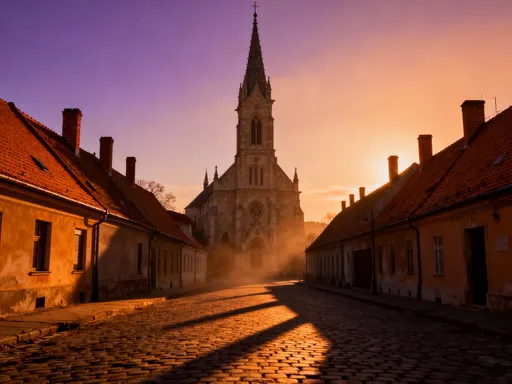
By late afternoon, the mood shifts. The sun begins its descent, and the golden hour transforms the city’s palette. Stone glows amber, rooftops shimmer in warm tones, and the Great Church becomes a radiant focal point. Streetlamps flicker on, and the pace slows further. This is when Debrecen reveals its poetic side—when light and shadow conspire to create moments of unexpected beauty. A simple bench in a quiet square becomes a vantage point for contemplation. The first glimpse, whether at dawn or dusk, sets the tone for everything that follows: an invitation to look more closely, to stay longer, to see differently.
Viewing the Great Church: More Than Just a Landmark
The Reformed Great Church stands as the soul of Debrecen, both literally and symbolically. Completed in 1824 after decades of planning and reconstruction, it replaced earlier wooden and stone churches lost to fire. Its neoclassical design, inspired by the Pantheon in Rome, features a grand portico with six Corinthian columns and a dome that rises 77 meters above the city. But more than its architectural grandeur, the church embodies resilience. It has survived fires, wars, and political upheavals, standing as a testament to the enduring spirit of the community.
To view the Great Church is to engage in a visual dialogue with history. From the central square—Nagytemplom tér—the full facade commands attention. The symmetry is striking, the proportions harmonious. Yet, the most powerful views come from slightly off-axis angles. From the corner of Kossuth Street, for instance, the dome emerges partially framed by surrounding buildings, creating a sense of discovery. In the early evening, when the sun strikes the western face, the stone appears to glow from within, as if lit by an internal fire. Photographers and painters have long favored this hour, when contrast and warmth are at their peak.
For those seeking quiet contemplation, the garden to the south of the church offers a peaceful retreat. Benches are placed beneath linden trees, facing the rear elevation. From here, the structure feels less monumental, more intimate. The sound of bells—rarely rung for tourism but still marking the hours—drifts across the space, adding a temporal dimension to the visual experience. Inside, the vast nave is sparsely adorned, in keeping with Protestant tradition. Sunlight filters through high windows, illuminating the wooden pews and the simple pulpit. There is no gilded altar, no ornate statues—only space, light, and silence. To stand within this hall is to understand how architecture can shape not just sight, but spirit.
Elevated Perspectives: Hills, Towers, and Hidden Vantage Points
While Debrecen is not a mountainous city, it offers subtle elevation changes that reward the observant traveler. To the southeast, the terrain rises gently toward the outskirts, where quiet residential streets climb small inclines. One such area, near the University Medical Center, provides unexpected panoramic views. From the top of Városház Street, looking back toward the city center, the dome of the Great Church rises above a sea of rooftops, with the distant Carpathians faintly visible on clear days. These vantage points are rarely marked on tourist maps, discovered instead through aimless wandering or local suggestion.
For a more structured ascent, the bell tower of the Great Church itself offers a climb of 197 steps. The effort is considerable, but the reward is unmatched. At the top, a narrow balcony encircles the base of the dome. From here, the city unfolds in all directions—tree-lined avenues, red-tiled roofs, and the patchwork green of parks and gardens. To the east, the open plains of the Hortobágy National Park begin to stretch out, a UNESCO World Heritage site known for its vast grasslands and traditional csárdas (inns). Even from this distance, the flat horizon evokes a sense of boundless space, a contrast to the urban density below.
Another lesser-known viewpoint lies within the Csokonai Theater complex. Its rooftop café, open during performances and select hours, provides a relaxed setting for observation. Sipping a cup of Hungarian tea while watching the city lights come on is a simple pleasure, yet one that deepens appreciation for Debrecen’s rhythm. Public buses, particularly line 1A, also offer elevated routes along the city’s periphery, where windows frame passing scenes like moving paintings. The value of these perspectives lies not in dramatic vistas, but in the shift they create in perception—reminding us that seeing a city from above is not just about height, but about gaining clarity.
Green Spaces as Viewing Platforms: Parks with a Purpose
Debrecen is a city of gardens and green oases, each designed not just for recreation but for reflection. The Dóczy Street Garden, tucked between historic buildings, is a prime example. Once part of a 19th-century villa estate, it has been preserved as a public space where manicured flowerbeds, winding paths, and wrought-iron benches invite stillness. From certain angles, the spire of the Great Church appears through a natural arch formed by chestnut trees, creating a living frame. This intentional framing is common in Debrecen’s park design—a subtle artistry that guides the eye and enhances visual harmony.
Even more expansive is the Small Forest (Kisállatkert), a hybrid of park, zoo, and botanical garden located just north of the city center. Originally established in the early 20th century, it combines native flora with carefully curated pathways. In spring, cherry blossoms line the main promenade, their delicate pink blooms contrasting with the darker evergreens. In autumn, the maples turn fiery red, and the air fills with the scent of damp earth and fallen leaves. Throughout the year, the park serves as a viewing platform—benches face specific landmarks, and clearings open to framed views of distant spires or the sky itself.
What sets these green spaces apart is their integration with daily life. Elderly couples walk hand in hand along shaded lanes, children chase ducks by the pond, and students read beneath the trees. The presence of people does not detract from the scenery; rather, it animates it. A city viewed in isolation feels static, but one seen in motion—through the laughter of children, the rustle of a newspaper, the clink of a coffee cup—feels alive. These parks are not just places to look at, but places to look from, offering vantage points where nature, architecture, and humanity intersect.
Urban Details: Windows, Courtyards, and Street-Level Beauty
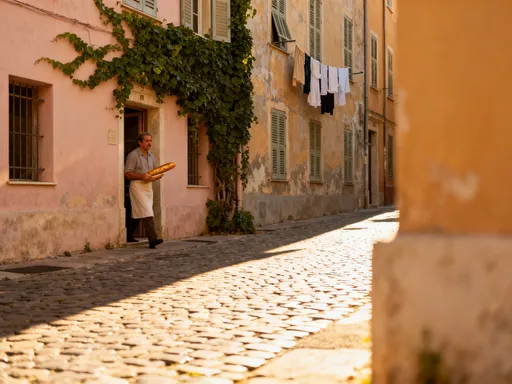
Beyond the grand landmarks, Debrecen’s true character resides in its details. A wrought-iron gate shaped like grapevines, a window box spilling with geraniums, a faded fresco on the side of an old apartment building—these are the quiet notes that compose the city’s visual symphony. In the historic district near the Great Church, side streets like Széchenyi and Ady Endre reveal hidden courtyards, accessible through arched passageways. These inner spaces, often overlooked, contain remnants of 18th-century townhouses, with carved stone lintels and wooden balconies weathered by time.
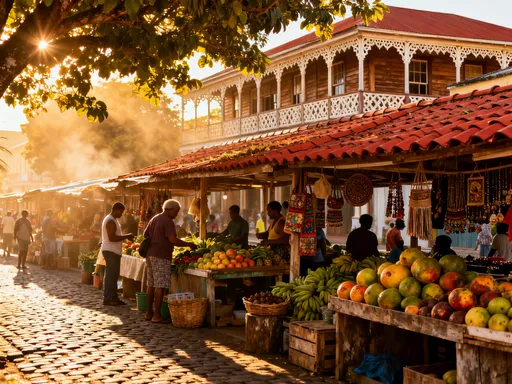
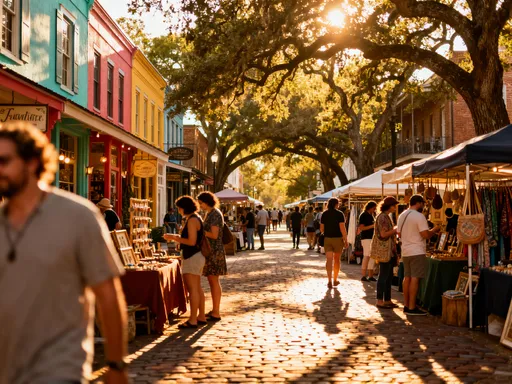
Wandering these alleys, one begins to notice patterns—the repetition of certain colors, the alignment of shutters, the way light falls across cobblestones at midday. These details are not curated for tourists; they are the natural byproducts of a city that has aged gracefully. A market vendor arranging paprika-filled baskets, a tailor hanging suits in a shop window, a cat napping on a sun-warmed windowsill—each contributes to a living tableau. The act of noticing becomes a form of participation, a way of connecting with the city on a human scale.
Slowing down amplifies this appreciation. Where checklist tourism urges speed, Debrecen rewards stillness. A five-minute pause on a bench can yield more insight than an hour of rushed sightseeing. The city teaches a different kind of seeing—one that values texture over scale, subtlety over spectacle. In these intimate moments, the boundary between observer and observed begins to dissolve, and the traveler becomes part of the scene.
Night Views: When the City Transforms
As darkness falls, Debrecen undergoes a quiet metamorphosis. The daytime bustle gives way to a serene hush. Streetlights cast warm pools of light on the pavement, and the facades of historic buildings are gently illuminated. The Great Church, lit from below, becomes a beacon, its dome glowing like a lantern in the night. The central square, now empty of vendors, takes on a dreamlike quality. Footsteps echo, and distant laughter drifts from a late-opening café. This is not a city that shuts down at dusk, but one that shifts into a different rhythm.
Evening walks along Main Street or through the Small Forest offer a chance to experience Debrecen’s nocturnal beauty. The thermal bath complex, particularly the Aquaticum Thermal & Wellness Center, is especially striking after dark. Steam rises from outdoor pools, catching the glow of submerged lights, creating a misty, ethereal atmosphere. Couples sit on the edge of the water, wrapped in towels, speaking in low tones. The sound of dripping water and distant music blends into a soothing soundscape. For those seeking a peaceful end to the day, this is an ideal setting—a place where body and mind can unwind while the senses remain gently engaged.
Safety and accessibility enhance the nighttime experience. Well-lit sidewalks, regular bus service, and a low crime rate make evening exploration comfortable for solo travelers and families alike. The city’s compact layout means that most attractions are within a 20-minute walk of each other. Whether strolling past illuminated churches, pausing at a 24-hour bakery for a slice of rétes, or simply sitting on a bench to watch the world pass by, the night offers a different kind of intimacy—one built on quiet observation and gentle connection.
Conclusion: The Power of Seeing Differently
Debrecen does not reveal itself all at once. Its beauty is cumulative, built from repeated glances, quiet moments, and the gradual accumulation of impressions. It challenges the modern traveler’s habit of rushing, of consuming destinations like content. Instead, it invites a slower, more intentional way of seeing—one that values depth over speed, presence over productivity. In doing so, it reshapes expectations of what Hungarian travel can be. Beyond the postcard views of Budapest, there are cities like Debrecen that offer authenticity, resilience, and a profound sense of place.
The act of truly looking—of pausing, focusing, and allowing a scene to settle into memory—is a radical practice in our distracted age. Debrecen rewards this practice generously. Whether from a hillside, a park bench, or a dimly lit street corner, each view adds a layer to understanding. It is not the scale of the sight that matters, but the quality of attention given to it. In a world that often feels oversaturated with images, Debrecen reminds us that the most powerful views are not the loudest, but the ones that linger in silence.
For those willing to step off the well-trodden path, Debrecen offers a revelation. It proves that beauty does not require grandeur, and significance does not depend on fame. Every city has moments like this—fleeting, unscripted, deeply human—if only we take the time to see them. So let us travel not to collect destinations, but to deepen our vision. Let us seek not just new places, but new ways of looking. Because sometimes, all it takes is a single glance to change how we see the world.